
The following graph shows a comparison of growth rates during the last 5 decades in the sectors: monetary assets, gross domestic product and net wages. In the first two decades the relation of increase between net wages and monetary assets was about 1:3, in the meantime it has climbed up to 1:50. Since the growth of the national product is only nearly linear, net wages have fallen back since the 80ies.
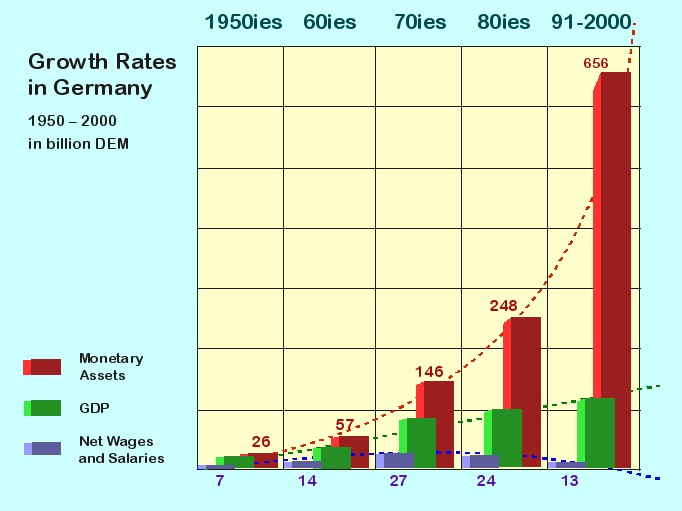
Since from a macro-economic view monetary assets and debts are identical figures, they cannot but grow at the same pace. Because, all savings that someone puts aside from his income cannot only be lent out, but they must be borrowed by somebody else in order to close the monetary cycle. Otherwise the money would be missing in circlulation and arouse a deflationary recession. That’s why all surplus money has to be fed back into the economy. This detour via loans, however, causes an ever bigger volume of interest flows.